
Request A Quote For Cockroach Control
Why Getting Rid Of Cockroaches Is Important
Getting rid of cockroaches is important because they can spread germs, contaminate food, trigger allergies, worsen asthma, and create an unhealthy living environment. Although cockroaches are small, they can become a serious household pest when they multiply and spread throughout a home.
- Cockroaches can spread bacteria and germs. Cockroaches often travel through garbage, drains, sewers, and other dirty areas before entering homes. They can carry bacteria and transfer them to kitchen counters, dishes, utensils, and food. This can increase the risk of food contamination and illnesses, including food poisoning.
- Cockroaches can trigger allergies and asthma. Cockroach droppings, saliva, shed skin, and body parts can contain allergens. When these particles become airborne, people may breathe them in. This can trigger sneezing, coughing, itchy eyes, skin irritation, and asthma attacks. Children and people who already have asthma may be especially vulnerable.
- Cockroaches contaminate food and food-preparation areas. Cockroaches can crawl into food containers, pantries, cabinets, and refrigerators. They may leave behind droppings, bacteria, and other contaminants. Getting rid of them helps protect the food you eat and keeps your kitchen sanitary.
- Cockroaches can damage household items. Cockroaches may feed on paper, cardboard, book bindings, fabric, and certain household materials. Although they do not usually cause major structural damage, a large infestation can damage stored belongings and contaminate items in cabinets and storage areas.
- Cockroaches can make a home less comfortable. Seeing cockroaches in kitchens, bathrooms, bedrooms, or other living spaces can cause stress, embarrassment, and difficulty sleeping. An infestation may also produce unpleasant odors, particularly when large numbers of cockroaches are present.
- Cockroach control helps maintain a clean and healthy home. Removing cockroaches, cleaning contaminated areas, sealing cracks, storing food in airtight containers, fixing water leaks, and taking out garbage regularly can reduce the conditions that allow them to survive.
- Cockroaches reproduce quickly. Some cockroach species can produce many offspring in a relatively short period. A few cockroaches can develop into a much larger infestation if they have access to food, water, and shelter. Eliminating them early can prevent the problem from becoming more difficult and expensive to control.
If cockroaches are left untreated, their population may grow, food and surfaces may become contaminated, and allergy or asthma symptoms may worsen. They can also spread from one room to another while searching for food, water, and shelter. The longer an infestation continues, the more difficult it may be to eliminate.
Cockroach Infestations
Cockroach infestations can grow surprisingly quickly. Under favorable conditions, a small cockroach population can develop into hundreds or even thousands of cockroaches within several months to a year. The rate of growth depends on the species, temperature, food and water availability, hiding places, and how effectively the infestation is controlled. German cockroaches are particularly concerning because they reproduce rapidly and commonly establish indoor populations in homes, apartments, restaurants, and other buildings.
The German cockroach is a useful example because it is one of the most common indoor pest species. Its egg cases typically take approximately three to four weeks to develop under favorable conditions, while nymphs generally require another six to twelve weeks to mature into adults. As a result, a new generation can become reproductively active within approximately two to three months from the time the eggs were laid, although development can take longer depending on environmental conditions. A female German cockroach commonly produces around four to eight egg cases during her lifetime, with each case containing approximately 30 to 40 eggs. Because females can produce multiple egg cases and several generations can develop simultaneously, populations can increase rapidly when conditions are favorable.
During the first few weeks of an infestation, cockroaches may remain hidden while their eggs develop and hatch. Within one to three months, newly hatched nymphs may mature while older females produce additional egg cases. Over three to six months, multiple overlapping generations can substantially increase the population. If food, water, and suitable hiding places remain available, an established infestation may become severe within six to twelve months, potentially spreading into multiple rooms. These timelines are illustrative rather than precise predictions because reproduction rates vary considerably with temperature, humidity, food availability, and the effectiveness of pest control measures.
Several biological and environmental factors contribute to rapid population growth. One important factor is overlapping generations, which allow older cockroaches to reproduce while younger individuals mature. Another is the protection provided by cockroach egg cases. Insecticides that kill exposed cockroaches may not kill the eggs inside these protective cases, allowing new nymphs to emerge after treatment. Abundant food and water, including crumbs, grease, pet food, garbage, leaking pipes, and condensation, can further support population growth. Cockroaches also shelter in narrow cracks, behind appliances, inside cabinet joints, and around plumbing, where they may be protected from disturbance and some pesticide treatments. If a treatment kills only part of the population, surviving cockroaches can continue reproducing and rebuild the infestation.
Seeing one cockroach does not necessarily mean that hundreds are present. A single cockroach may have entered from outdoors, arrived in a package, or moved from another apartment. However, the species and frequency of sightings can provide useful clues. An occasional large cockroach may be an isolated intruder, particularly if it is a species associated with outdoor environments, drains, or basements. Repeated sightings of small cockroaches in kitchens or bathrooms are more concerning for an established infestation, especially when the insects are German cockroaches. Cockroach droppings, egg cases, shed skins, and repeated sightings provide additional evidence that cockroaches are living and reproducing nearby. Seeing cockroaches during daylight can sometimes indicate a large population or a shortage of available hiding places, although daylight sightings alone cannot reliably establish the size of an infestation.
The time required to eliminate an infestation depends on its severity and the effectiveness of the treatment. With appropriate control measures, cockroach activity may begin declining within days, but eliminating an established population often takes several weeks or longer. Effective management generally involves placing appropriately labeled cockroach gel baits near hiding places and areas of activity, removing food residues and standing water, and using sticky traps to identify high-activity areas and monitor progress. Bait should be replenished according to the product label, and newly hatched nymphs should be monitored because surviving eggs can contribute to continued activity. Sealing suitable gaps and investigating neighboring apartments or shared plumbing routes may also be necessary when cockroaches continue to appear. Bug bombs are generally not a reliable stand-alone solution because they often fail to reach cockroach hiding places and may interfere with bait-based treatments.
Professional Cockroach Control Services
Hiring our local professional cockroach exterminators in Hanover, Pennsylvania, is more effective than attempting to eliminate an infestation yourself because our professionals have the training and equipment to identify the cockroach species, locate hidden nesting and breeding areas, and select appropriate treatments. Cockroaches often hide inside wall voids, behind appliances, beneath cabinets, and around plumbing, making it difficult to eliminate an infestation with store-bought sprays alone. Our professionals develop a targeted treatment plan using appropriate baits, insecticides, and preventive measures to address the source of the problem rather than just the cockroaches you can see. Our professional treatments can also help reduce the risk of pesticide misuse, identify conditions that attract cockroaches, and provide follow-up visits to monitor whether the infestation has been eliminated. Our local exterminators also recognize common pest issues affecting properties in the Hanover area and recommend ways to prevent cockroaches from returning. Our professional services also save time and money if repeated unsuccessful treatments allow the infestation to continue growing.
Cockroaches In Pennsylvania
American Cockroaches
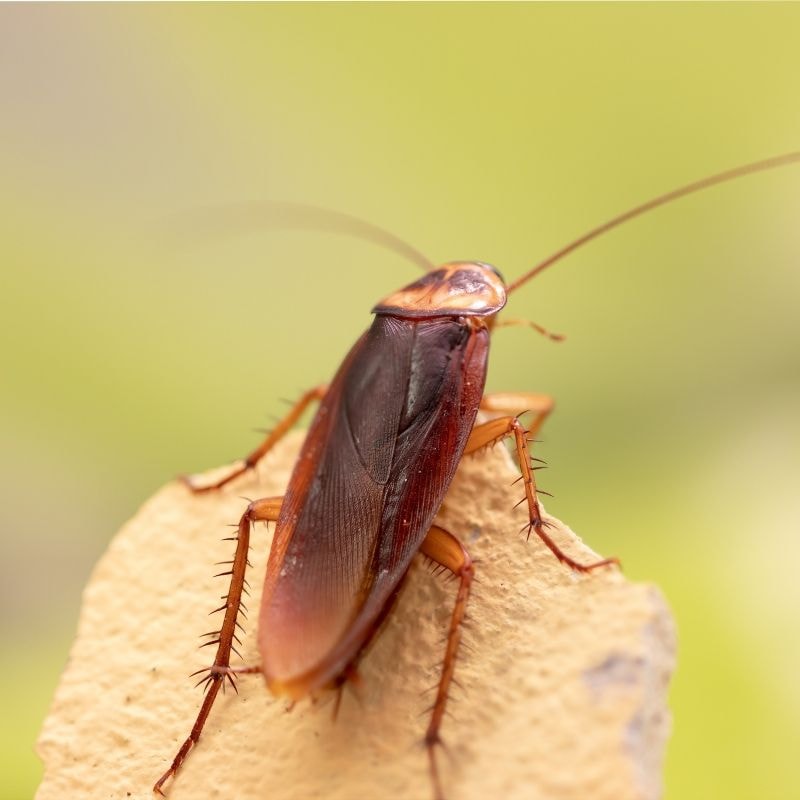
Around Hanover, Pennsylvania, American cockroaches (Periplaneta americana) are most likely to be found in warm, damp, and sheltered environments where they have access to water, food, and protection. Although Hanover experiences cold winters, American cockroaches can survive year-round in heated buildings, underground utility systems, and other protected locations. Outdoors, they are more likely to be encountered during the warmer months, particularly from late spring through early fall.
Within Hanover, American cockroaches may occur in older buildings, basements, crawl spaces, commercial kitchens, restaurants, grocery stores, and other places where moisture and food waste are present. They can also inhabit sewer systems, storm drains, drainage structures, and areas around underground pipes. In residential neighborhoods, they may be found near leaking outdoor faucets, damp foundation areas, mulch, leaf litter, garbage containers, and other moist locations around homes. They can enter buildings through gaps around plumbing, foundation cracks, poorly sealed doors, and openings connected to drainage systems.
In Hanover's residential areas, finding an American cockroach inside a basement, bathroom, or kitchen does not necessarily mean that the home has an established infestation. A cockroach may have wandered inside from outdoors or entered through a plumbing or structural opening. However, repeated sightings, particularly in damp basements or near floor drains, may indicate a nearby population or a recurring entry point. During Pennsylvania's colder months, American cockroaches are more likely to remain in heated buildings, sewer systems, and other sheltered environments than to remain active in exposed outdoor areas.
Brown Banded Cockroaches
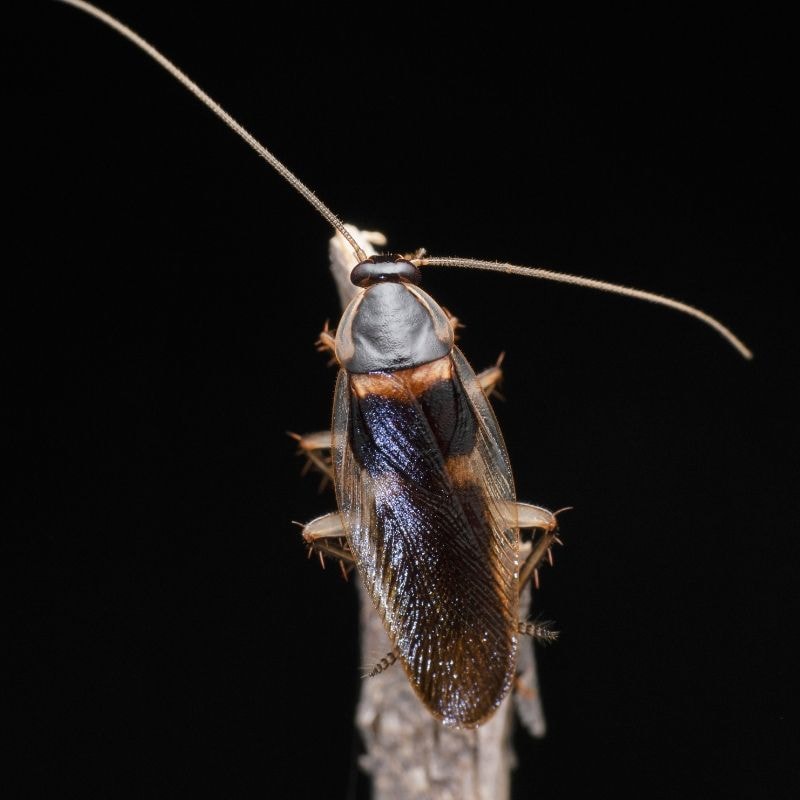
Around Hanover, Pennsylvania, brown-banded cockroaches (Supella longipalpa) are most likely to be found inside heated residential and commercial buildings, particularly in areas that are warm, relatively dry, and sheltered. Unlike American cockroaches, which are commonly associated with sewers, drains, and damp basements, brown-banded cockroaches prefer warmer indoor environments and can survive in locations with less moisture. Hanover's cold winters make heated indoor spaces especially suitable for this species throughout the year.
Within homes in Hanover, brown-banded cockroaches may be found in bedrooms, living rooms, kitchens, home offices, and other rooms where indoor temperatures remain comfortable. They commonly hide behind picture frames, inside furniture, beneath tables and chairs, behind wall decorations, and within cracks in cabinets. They may also hide in electrical appliances, televisions, clocks, and other equipment that produces warmth. Unlike many other cockroach species, brown-banded cockroaches do not necessarily congregate around sinks, plumbing, or other damp areas. They can establish populations in bedrooms and upper floors, including locations far from kitchens and bathrooms.
In Hanover's apartments, houses, hotels, offices, restaurants, and other commercial buildings, brown-banded cockroaches may be introduced through infested furniture, used appliances, cardboard boxes, deliveries, or items transported from another infested location. They can spread between rooms and, in some circumstances, between apartments or neighboring units. Because they prefer warm indoor conditions, they may remain active throughout the winter rather than disappearing when outdoor temperatures fall. Their small size and tendency to hide in furniture, wall crevices, and objects mounted high on walls can make them difficult to detect until their population increases.
German Cockroaches
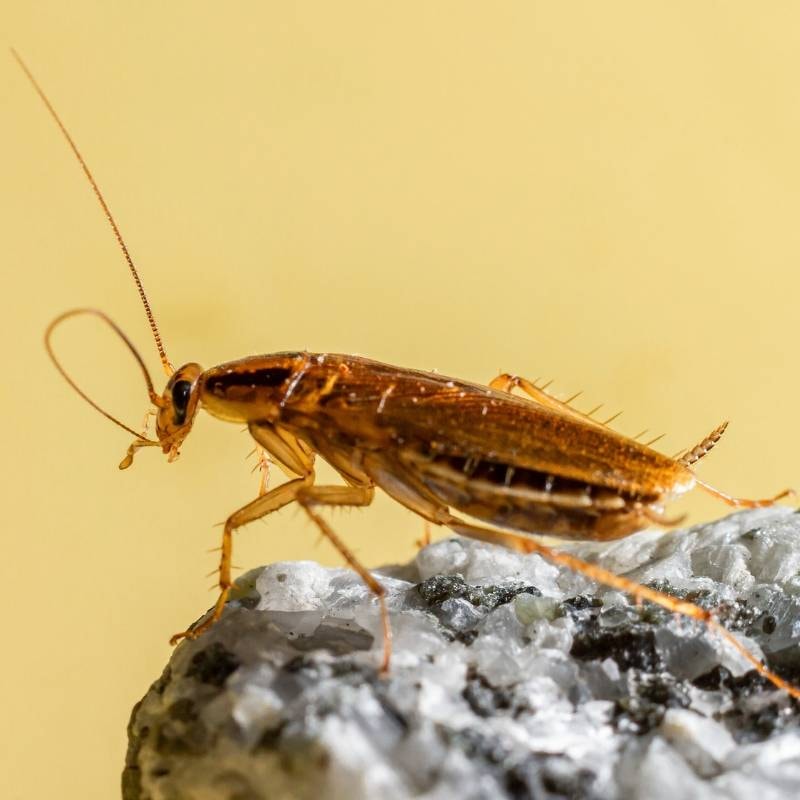
Around Hanover, Pennsylvania, German cockroaches (Blattella germanica) are most likely to be found indoors in residential, commercial, and food-service buildings where warmth, moisture, food, and shelter are readily available. Unlike American cockroaches, which are frequently associated with sewers and damp outdoor environments, German cockroaches are strongly associated with indoor infestations and depend on buildings to provide suitable living conditions. They can be found throughout the year in Hanover because indoor heating allows them to survive Pennsylvania's cold winters.
Within Hanover homes and apartments, German cockroaches are typically found in kitchens and bathrooms, particularly near refrigerators, stoves, dishwashers, sinks, and plumbing fixtures. They hide in narrow cracks and crevices, behind cabinets, underneath appliances, inside cupboard hinges, and around pipes where condensation or leaks provide moisture. They are especially attracted to areas where food crumbs, grease, garbage, and other organic materials accumulate. Although kitchens are their most common hiding and breeding locations, German cockroaches can spread into bathrooms, laundry rooms, pantries, and other rooms when their population increases or when food and water are available elsewhere. They are generally more active at night and often remain hidden during the day.
In Hanover's restaurants, grocery stores, hotels, hospitals, schools, offices, and other commercial buildings, German cockroaches may occur in food-preparation areas, employee break rooms, storage spaces, and locations around commercial kitchen equipment. Restaurants and other establishments that handle food can provide favorable conditions because of the regular availability of food residue, moisture, and warm equipment. German cockroaches can also enter houses and businesses through infested cardboard boxes, grocery deliveries, used appliances, furniture, and other items transported from an infested location. In apartment buildings, they may spread between adjoining units through gaps around plumbing, walls, electrical conduits, and shared utility spaces.
German cockroaches are particularly successful at establishing indoor populations because they reproduce relatively quickly and hide in small spaces that are difficult to inspect. Their presence does not necessarily indicate that a building is dirty; they can survive in clean buildings if they have access to food, water, and shelter. However, recurring sightings, small cockroaches appearing alongside adults, or cockroaches emerging from kitchen appliances and cabinet crevices may indicate an established infestation. German cockroaches are approximately half an inch long as adults, light brown to tan, and have two distinctive dark, parallel stripes running lengthwise behind the head.
Oriental Cockroaches
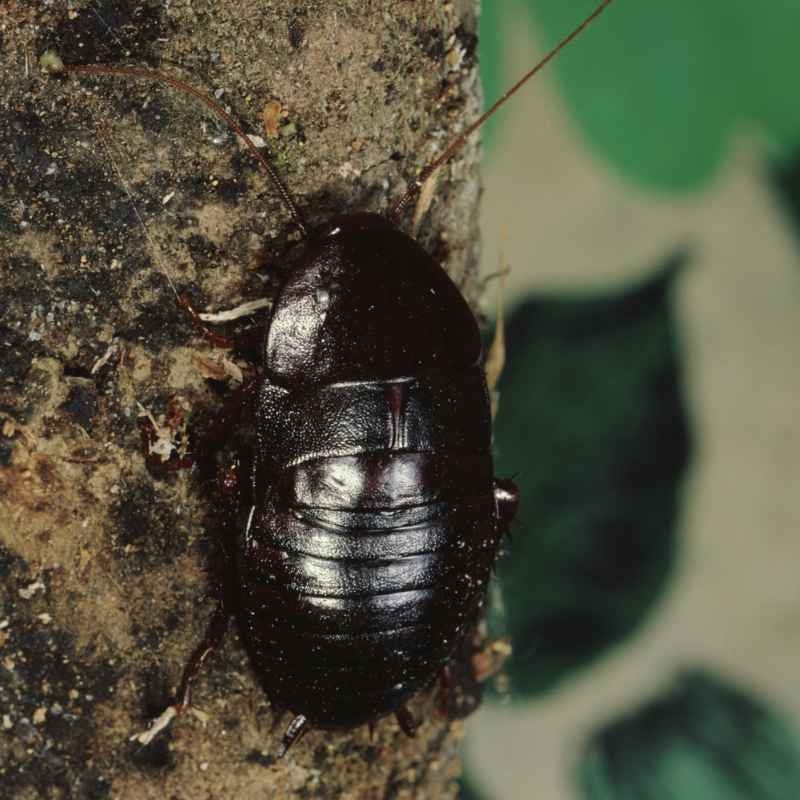
Around Hanover, Pennsylvania, Oriental cockroaches (Blatta orientalis), sometimes called water bugs or black cockroaches, are most likely to be found in damp, cool, and sheltered environments around homes, commercial buildings, and outdoor structures. Unlike German cockroaches, which typically establish populations in warm indoor kitchens and bathrooms, Oriental cockroaches prefer moist areas and are commonly associated with basements, drains, sewers, and ground-level spaces. Hanover's climate, which includes humid summers, rainfall, and cold winters, can provide suitable conditions for this species. During warmer months, they may be active outdoors, while colder weather encourages them to seek protected locations such as heated buildings, underground spaces, and areas around foundations.
Within residential properties in Hanover, Oriental cockroaches are commonly associated with damp basements, crawl spaces, floor drains, utility rooms, laundry rooms, and areas around leaking pipes or water heaters. They may also hide beneath sinks, near sump pumps, around basement plumbing, and in dark spaces where moisture accumulates. Outdoors, they may occur beneath leaf litter, mulch, stones, woodpiles, and decaying vegetation, as well as around garbage containers and beneath porches or steps. Cracks in foundations, gaps around exterior doors, and openings around plumbing can provide routes into buildings. Homes with damp basements, poor drainage, leaking downspouts, or standing water around their foundations may offer particularly suitable conditions for this species.
In Hanover's commercial and public buildings, Oriental cockroaches may be encountered in restaurant basements, storage rooms, boiler rooms, utility areas, sewer connections, and other locations where moisture and organic debris accumulate. They can also occur around storm drains, sewer systems, underground utility spaces, and the lower levels of older buildings. Restaurants and other businesses may attract them when food waste, leaking plumbing, or damp storage areas provide favorable conditions. Unlike German cockroaches, Oriental cockroaches are less likely to establish large populations in dry areas such as bedrooms or upper-floor offices, although they can enter these spaces under certain circumstances. They are generally more common near ground level, where moisture and access to outdoor habitats are readily available.
Oriental cockroaches may remain active outdoors in Hanover during warmer periods, particularly from late spring through early fall, depending on local temperatures and moisture levels. During Pennsylvania's colder winters, they are more likely to survive in protected underground locations, sewer systems, and sheltered building spaces than in exposed outdoor environments. They are relatively slow-moving compared with American and German cockroaches, and adults are typically about 1 to 1¼ inches long, with shiny, dark reddish-brown to nearly black bodies. Adult females have short, reduced wings, while males have longer wings that cover much of the abdomen.
Pennsylvania Woods Cockroaches
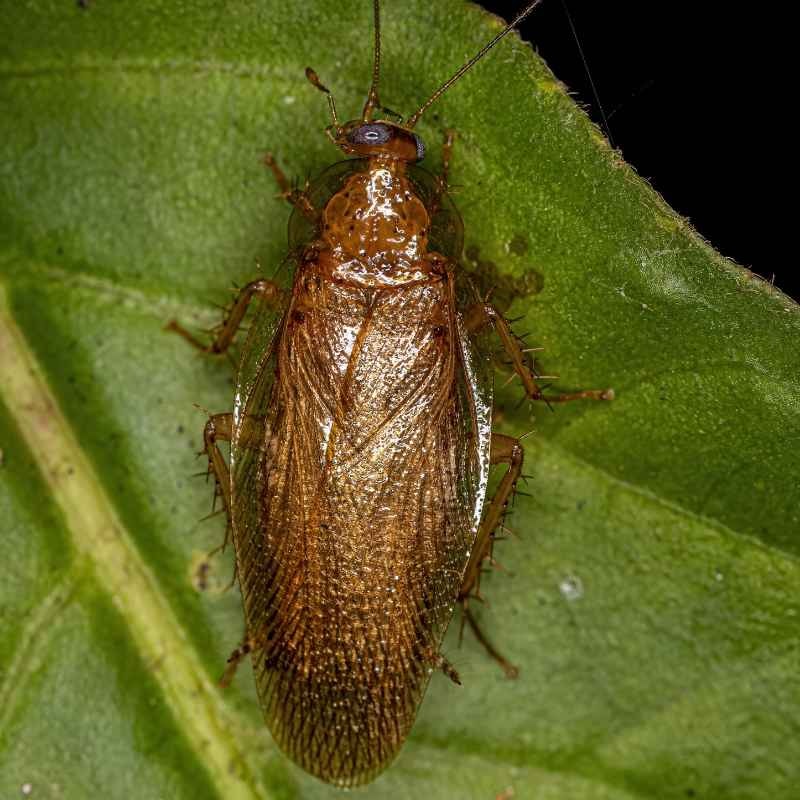
Pennsylvania wood cockroaches (Parcoblatta pennsylvanica) are typically found outdoors in wooded areas, forests, and other habitats with abundant trees, decaying wood, and leaf litter. In Hanover, Pennsylvania, this species would be most likely to occur in wooded areas throughout the surrounding landscape, particularly in places where mature trees, fallen logs, tree stumps, and decomposing plant material provide shelter and food. The species is native to eastern North America and occurs in Pennsylvania. Hanover's surrounding woodlands, rural properties, and forest edges provide potentially suitable habitat.
In and around Hanover, Pennsylvania wood cockroaches may inhabit deciduous woodlands, woodland edges, parks with wooded sections, and properties bordering forests. They commonly shelter beneath loose tree bark, inside decaying logs, beneath fallen branches, within tree cavities, and among damp leaf litter. They may also occur in woodpiles, beneath loose bark on dead trees, and around tree stumps. These locations provide protection from predators and changing weather while supplying organic material that supports their diet. They feed on decaying plant matter and other organic materials, making forest floors and decomposing wood particularly suitable environments.
Pennsylvania wood cockroaches may also be encountered around homes and buildings near wooded areas in Hanover. They can shelter in outdoor firewood stacks, beneath bark, around fallen branches, and near exterior wood piles. Adult males are attracted to light and may fly toward porch lights, outdoor lighting, illuminated windows, or open doors during warm weather, particularly in late spring and summer. As a result, residents living near wooded lots or forest edges may occasionally find them on porches, near windows, or inside buildings after the insects are attracted to indoor lighting. However, these cockroaches are primarily outdoor insects and generally do not establish the persistent indoor infestations associated with German cockroaches.
The species is generally associated with warmer months, when adults are active and males may fly in search of females. In Hanover, sightings are therefore more likely during late spring and summer, although seasonal activity varies with local weather and temperature. Pennsylvania wood cockroaches are usually brown and relatively slender. Adult males have fully developed wings and are capable of flight, while females have shorter wings and are less likely to fly. They may resemble other outdoor cockroach species, so identification based solely on color or size can be unreliable.