
Request A Quote For Mosquito Control
Why Getting Rid Of Mosquitoes Is Important
Getting rid of mosquitoes on your property in Hanover, PA, is important for protecting your family, pets, and guests from mosquito bites and the diseases these insects can transmit. Mosquitoes thrive in areas with standing water, which can collect in birdbaths, clogged gutters, flowerpots, buckets, old tires, and other containers around residential and commercial properties. Hanover's warm, humid summer weather and seasonal rainfall can create favorable conditions for mosquito breeding, allowing populations to increase quickly when suitable habitats are available. Mosquito bites can cause itching, swelling, and skin irritation, while some mosquitoes can transmit diseases such as West Nile virus. Although not every mosquito carries a disease, reducing mosquito populations can help lower the risk of exposure. Mosquitoes can also make it difficult to enjoy outdoor activities, including gardening, grilling, playing in the yard, and relaxing on a patio. Heavy mosquito activity may make outdoor spaces uncomfortable for homeowners and their visitors, potentially limiting the use of otherwise enjoyable parts of a property. Removing standing water, maintaining gutters, trimming overgrown vegetation, and eliminating other potential breeding sites can help reduce mosquito activity, but these steps may not eliminate an established population. Our professional mosquito control can help identify breeding areas, target mosquito resting sites, and reduce populations around your property. For homeowners in Hanover and the surrounding areas, addressing mosquito problems early in the season and maintaining preventive measures throughout the warmer months can help keep outdoor spaces more comfortable and reduce the risks associated with mosquito exposure.
Mosquito Infestations
Mosquito infestations can grow rapidly, sometimes within a matter of days, when temperatures are warm and standing water is available for breeding. In Hanover, PA, mosquito populations can increase significantly during the warmer months, especially after periods of rain that leave water collecting in clogged gutters, birdbaths, flowerpots, buckets, discarded tires, and other outdoor containers. Depending on the species and environmental conditions, mosquito eggs can hatch within a few days, and mosquito larvae can develop into biting adults in approximately 7–14 days under favorable conditions, although development may take longer in cooler weather. Female mosquitoes can lay dozens to hundreds of eggs during a single reproductive cycle, and some species can lay eggs repeatedly throughout their lives. As a result, even a small amount of standing water can produce a new generation of mosquitoes and contribute to a noticeable increase in activity around a property. Warm temperatures, high humidity, and frequent rainfall can accelerate population growth, while shaded vegetation and damp areas provide resting places for adult mosquitoes during the day. Because mosquito larvae develop in water, eliminating standing water before they mature into adults is one of the most effective ways to interrupt their life cycle. Homeowners in Hanover should regularly empty outdoor containers, clean gutters, maintain drainage, and inspect their properties for overlooked breeding sites. If mosquito activity remains heavy despite these preventive measures, our professional mosquito control technicians can identify potential breeding habitats and apply targeted treatments to help reduce the population before it grows further.
Professional Mosquito Control Services
Hiring our local mosquito exterminators in Hanover, PA, is more effective than trying to eliminate mosquitoes on your own because our professionals can identify breeding sites, determine where mosquitoes are resting, and develop a targeted treatment plan for your property. Although DIY methods such as removing standing water, using mosquito repellents, and installing outdoor fans can help reduce mosquito activity, they often do not address every source of the problem. Mosquitoes can breed in surprisingly small amounts of standing water, including clogged gutters, flowerpot saucers, drainage areas, discarded containers, and other locations that are easy to overlook. Our professional exterminators have the knowledge and equipment to locate potential breeding habitats and apply appropriate treatments to areas where mosquitoes are likely to gather. Our local pest control professionals serving Hanover and the surrounding communities are also be familiar with regional mosquito activity and seasonal conditions that contribute to population growth in south-central Pennsylvania. Depending on the property, our professional mosquito control may include treating suitable outdoor resting areas, addressing accessible breeding sites, and recommending preventive measures to reduce future mosquito activity. Another important advantage is that our exterminators can help you understand which control methods are appropriate for your property, particularly if you have children, pets, gardens, or outdoor living spaces that require special consideration. Mosquito control products must be used according to their labels to avoid unnecessary exposure to people, animals, and beneficial insects. Our professional treatments also save time and effort when mosquito populations are extensive or continue returning despite repeated DIY attempts. Because mosquito eggs and larvae can develop into biting adults under favorable conditions, addressing the problem early and monitoring for new breeding sites can help prevent populations from increasing. While no treatment can guarantee the complete elimination of mosquitoes from an outdoor property, hiring our certified local mosquito exterminators provides a more comprehensive approach to reducing mosquito activity and making your yard, patio, and other outdoor spaces more comfortable throughout the warmer months in Hanover, PA.
Mosquitoes In Pennsylvania
Asian Tiger Mosquitoes
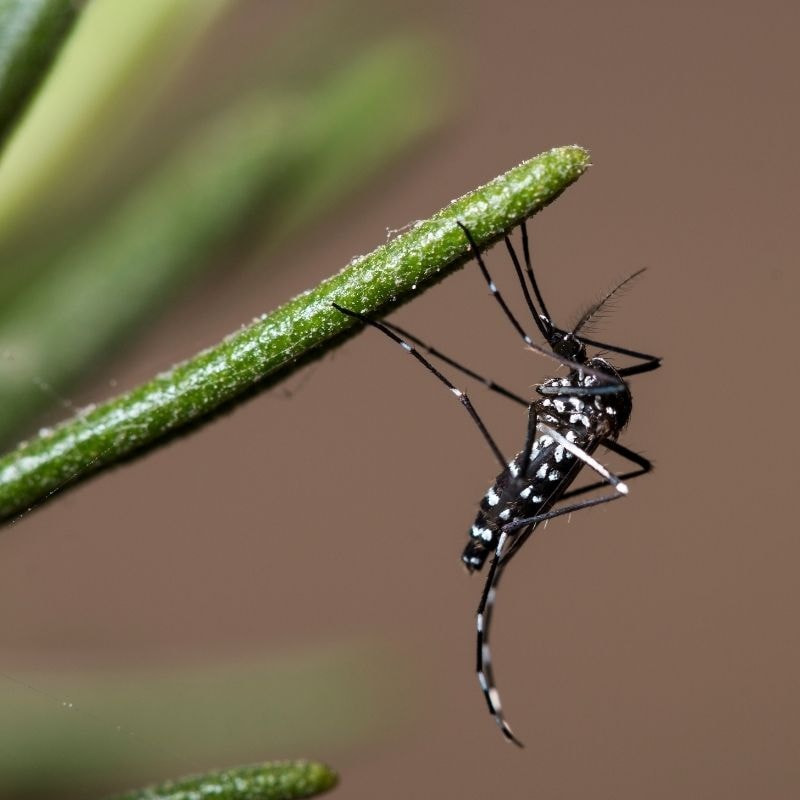
Around Hanover, PA, Asian tiger mosquitoes (Aedes albopictus) are most likely to be found in residential neighborhoods, backyards, gardens, and other outdoor areas where small amounts of standing water collect. These mosquitoes are recognizable by their black bodies and distinctive white stripes on their legs and bodies. They are particularly well adapted to living near people and commonly breed in artificial containers rather than large ponds or lakes.
Around homes and businesses in Hanover, Asian tiger mosquitoes are especially likely to breed in flowerpot saucers, birdbaths, clogged gutters, buckets, discarded tires, children's toys, tarps, and uncovered outdoor containers that hold rainwater. They can also develop in water collected in drainage areas, ornamental containers, and other small spaces that may be overlooked during routine yard maintenance. Their eggs are often laid along the inner surfaces of containers just above the waterline, where they can survive periods without water and hatch when the area becomes flooded.
Adult Asian tiger mosquitoes are commonly found in shaded, humid areas with dense vegetation, including gardens, landscaped yards, overgrown property edges, and areas beneath shrubs and bushes. During the day, they often rest in cool, protected locations where moisture helps prevent them from drying out. Because they are aggressive daytime biters, residents may encounter them while gardening, mowing the lawn, walking through shaded yards, or spending time on patios and decks. Unlike some mosquito species that are most active around dusk, Asian tiger mosquitoes can bite throughout the day, with activity often increasing during the morning and late afternoon.
In Hanover and the surrounding York and Adams Counties, properties with mature landscaping, unmanaged vegetation, and numerous outdoor containers may provide favorable conditions for these mosquitoes, particularly during Pennsylvania's warmer months. However, their presence varies by property and season, so these locations should be considered common potential habitats rather than confirmed hotspots.
To reduce Asian tiger mosquito activity, empty standing water from outdoor containers at least once a week, clean gutters, replace water in birdbaths regularly, and trim dense vegetation where adult mosquitoes may rest. Because these mosquitoes can breed in very small amounts of water, inspecting the entire property is important. If mosquito activity remains high after these steps, our professional mosquito exterminators can help identify overlooked breeding sites and recommend targeted control measures.
Eastern Tree Hole Mosquitoes
Around Hanover, PA, eastern tree hole mosquitoes (Aedes triseriatus) are most likely to be found in wooded areas, mature residential neighborhoods, and properties with numerous trees, particularly where natural cavities collect rainwater. This mosquito species is native to the eastern United States and is commonly associated with deciduous forests and wooded environments. Unlike Asian tiger mosquitoes, which frequently breed in artificial containers around homes, eastern tree hole mosquitoes typically lay their eggs in water-filled cavities in trees, making wooded properties and areas with older trees especially suitable habitats.
Around Hanover and the surrounding York and Adams Counties, eastern tree hole mosquitoes may be found in wooded backyards, properties bordering forests, parks with mature trees, and areas containing decaying or damaged trees. They commonly breed in water that collects inside tree holes, hollow trunks, and cavities formed where branches have broken away from the trunk. These natural containers can hold rainwater for extended periods, providing suitable conditions for mosquito larvae to develop. Tree cavities may be particularly productive breeding sites during the warmer months when rainfall and temperatures support mosquito development.
Adult eastern tree hole mosquitoes are often found in shaded, moist areas beneath tree canopies, along woodland edges, and among dense vegetation. They may also enter nearby residential yards when homes are located close to wooded habitats. These mosquitoes generally prefer sheltered environments and may bite people who spend time gardening, walking along wooded trails, working outdoors, or relaxing in shaded areas. Their activity can be especially noticeable during the warmer months in Pennsylvania, although local abundance depends on weather conditions, available breeding sites, and seasonal temperatures.
Eastern tree hole mosquitoes are also important from a public health perspective because they are the primary natural vector of La Crosse virus, which can cause La Crosse encephalitis, a rare but potentially serious illness affecting the nervous system. Infection is uncommon, but children who spend time playing in wooded yards and other mosquito habitats may be at risk of exposure. Not every mosquito carries the virus, but reducing mosquito bites is an important preventive measure.
To reduce eastern tree hole mosquito activity around your property in Hanover, inspect your yard for water-holding tree cavities where practical, remove unnecessary containers that collect rainwater, and maintain vegetation around outdoor living areas. Do not fill or seal natural tree cavities with chemicals or materials that could harm the tree. Instead, focus on eliminating artificial breeding sites and reducing mosquito exposure with appropriate repellents, protective clothing, and professional mosquito control when needed. A local exterminator can help assess wooded properties and identify practical ways to reduce mosquito activity without unnecessarily damaging trees or other beneficial wildlife habitats.
Inland Floodwater Mosquitoes
Around Hanover, PA, inland floodwater mosquitoes (Aedes vexans) are most likely to be found in low-lying areas, fields, grassy depressions, and properties where rainwater or floodwater collects after storms. This mosquito species is common throughout Pennsylvania and is particularly associated with temporary pools of standing water created by heavy rainfall, overflowing streams, and localized flooding. Unlike mosquitoes that primarily breed in permanent water sources, inland floodwater mosquitoes lay their eggs in damp soil that may later become submerged. When rainfall or flooding covers these eggs with water, they can hatch, allowing mosquito populations to increase rapidly when temperatures are favorable.
Around Hanover and the surrounding York and Adams Counties, inland floodwater mosquitoes may be found near drainage ditches, roadside depressions, poorly drained lawns, low-lying fields, and areas bordering creeks or other waterways. Properties with uneven ground, inadequate drainage, or sections of the yard that remain wet after heavy rainfall can also provide suitable breeding conditions. Agricultural fields, grassy meadows, and open spaces near wooded areas may support these mosquitoes when temporary pools form following storms. Because their breeding sites can appear and disappear with changing weather conditions, mosquito activity may increase noticeably after periods of heavy rain.
Adult inland floodwater mosquitoes are often encountered in yards, gardens, parks, recreational areas, and other outdoor spaces near their breeding habitats. They can travel considerable distances from their breeding sites in search of hosts, so you may experience bites even when there is no obvious standing water on your property. These mosquitoes are aggressive biters and are generally most active during the evening and nighttime, although activity can vary with temperature, humidity, and other environmental conditions. In Hanover, their numbers may rise during the warmer months, especially after repeated rainfall or flooding creates new breeding areas.
To reduce inland floodwater mosquito activity around your property, inspect your yard after heavy rain and address drainage problems that allow water to remain in artificial containers or other manageable areas. Empty buckets, flowerpot saucers, and other objects that collect rainwater, and keep gutters clear so water can drain properly. Because inland floodwater mosquitoes often breed in temporary pools spread across larger areas, eliminating every breeding site may not be practical for individual homeowners. Our local mosquito exterminators can inspect your property, identify conditions contributing to mosquito activity, and make appropriate treatments when populations become difficult to manage. Reducing standing water where feasible and using an effective insect repellent can help make outdoor spaces around Hanover more comfortable during mosquito season.
Northern House Mosquitoes
Around Hanover, PA, northern house mosquitoes (Culex pipiens) are most likely to be found around residential neighborhoods, commercial properties, and urban areas where standing water collects in gutters, storm drains, catch basins, and other water-holding structures. This mosquito species is common throughout Pennsylvania and is well adapted to living near people. Unlike floodwater mosquitoes, which typically breed in temporary pools created by rainfall, northern house mosquitoes often reproduce in stagnant water that remains in place for extended periods. As a result, properties with clogged drainage systems, neglected water containers, or poorly maintained outdoor areas may provide suitable breeding habitats.
Around Hanover and the surrounding York and Adams Counties, northern house mosquitoes may be found near storm drains, roadside drainage systems, catch basins, neglected swimming pools, rain barrels, and containers holding stagnant water. They can also breed in water that collects in clogged gutters, old tires, buckets, and other outdoor objects. Residential properties with poor drainage or areas where organic debris accumulates in standing water may be particularly attractive breeding sites. These mosquitoes can also develop in underground drainage structures and other concealed water sources, making their breeding locations difficult for property owners to identify without a careful inspection.
Adult northern house mosquitoes commonly rest in cool, sheltered locations during the day, including garages, sheds, crawl spaces, basements, dense vegetation, and other protected areas around buildings. They are generally most active from dusk through the night, when they seek out people and other animals for blood meals. Homeowners in Hanover may notice them around porches, patios, outdoor lighting, and entryways during the warmer months, particularly when humid weather and persistent standing water support their development. Because adult mosquitoes can move away from their breeding sites, their presence around a home does not necessarily mean they are reproducing directly on the property.
Northern house mosquitoes are also important from a public health perspective because they can transmit West Nile virus. The risk of infection varies by location and season, and not every mosquito carries the virus. Nevertheless, reducing mosquito populations and preventing bites are worthwhile precautions, particularly during periods of increased mosquito activity in Pennsylvania.
To reduce northern house mosquito activity around your Hanover property, remove standing water from outdoor containers, keep gutters clear, maintain drainage systems, and repair or remove neglected water-holding structures. Check window screens and door seals to prevent mosquitoes from entering your home, and use an EPA-registered insect repellent when spending time outdoors. If mosquito activity remains high despite these measures, our local mosquito exterminators can help identify concealed breeding sites, assess potential resting areas, and make targeted treatments to reduce mosquito populations around your property.