
Request A Quote For Stink Bug Control
Why Getting Rid Of Stink Bugs Is Important
Getting rid of stink bugs is important because they can become a nuisance in homes, damage certain plants and crops, and release an unpleasant odor when they are crushed or disturbed. Although stink bugs are generally not dangerous to humans, controlling them can help protect your home, garden, and food crops.
- Stink bugs can damage plants and crops. One of the main reasons to control stink bugs is that many species feed on plants. The brown marmorated stink bug (Halyomorpha halys), which is common in Pennsylvania, uses its needle-like mouthparts to pierce plant tissues and suck out fluids. They can damage apples, peaches, tomatoes, peppers, corn, soybeans, and other crops. Feeding can leave behind discolored spots, dents, scars, and misshapen fruit. Severe infestations can reduce crop quality and cause financial losses for gardeners and farmers.
- Stink bugs can invade homes in large numbers. Stink bugs often enter buildings in late summer and fall as they search for protected places to survive the winter. They can gather around windows, doors, siding, attics, and wall openings. Although they generally do not reproduce indoors or cause structural damage, large numbers can become difficult to manage. They may collect in light fixtures, window frames, curtains, and other areas of the home. Sealing cracks around windows, doors, siding, and utility openings can help prevent them from entering.
- Stink bugs release an unpleasant odor. Stink bugs get their name from the strong odor they can release when threatened, handled, or crushed. The odor comes from defensive chemicals produced by glands in their bodies. The smell can be unpleasant and may linger temporarily on surfaces or in enclosed spaces. Crushing stink bugs can also leave stains or residue. A better way to remove them is to collect them gently with a container or vacuum them up and empty the contents outdoors, taking care not to leave live bugs inside the vacuum.
- Stink bugs can be a nuisance in everyday life. When stink bugs enter a home, they may crawl across walls, ceilings, furniture, and curtains. They can also fly around rooms, sometimes bumping into lights or windows. Their presence can be especially frustrating when dozens or hundreds gather in one building. Removing them and preventing further entry can make living spaces more comfortable.
- Stink bugs can enter through small openings. Stink bugs can squeeze through gaps around window screens, door frames, vents, rooflines, and utility pipes. Once inside, they may hide in wall voids, attics, or other sheltered spaces until warmer weather returns. Preventing entry is often more effective than trying to eliminate every bug after it has entered. Useful steps include repairing window screens, installing door sweeps, sealing exterior cracks, and reducing access points around the roofline.
- Stink bugs are generally not dangerous to humans or household pets. They do not normally bite people, sting, or spread human diseases in the way some other pests can. However, their defensive secretions may irritate sensitive skin or eyes if they come into contact with them. It is best to avoid crushing them with bare hands and to wash your hands after handling them.
Getting rid of stink bugs is important because they can damage crops and garden plants, invade homes in large numbers, and produce unpleasant odors. They are usually more of a nuisance than a direct health threat, but a large infestation can be frustrating and costly, particularly for gardeners and farmers. The most effective approach is to remove stink bugs that are already indoors, seal openings that allow them to enter, and protect vulnerable plants when necessary. In homes, prevention is usually more effective than relying on indoor insecticide sprays.
Stink Bug Infestations
Stink bug infestations can appear to grow very quickly, sometimes going from a few visible insects to dozens or even hundreds gathering around a home over the course of several days or weeks. However, the sudden increase in stink bugs inside a house is usually caused by insects entering from outdoors or emerging from winter hiding places, rather than reproducing inside the home. In Pennsylvania, the brown marmorated stink bug (Halyomorpha halys) is the most common species responsible for these seasonal invasions. The rate of growth depends on the season, outdoor population, weather, and the number of entry points around a building.
- Within a few days, you may begin noticing several stink bugs on windows, walls, ceilings, or near light sources. During warm fall weather, stink bugs may gather on sun-facing exterior walls before finding places to shelter.
- Within one to two weeks, if many stink bugs are gathering outside and the building has accessible gaps, additional insects may enter over several days. You could begin finding them in multiple rooms, especially near windows, doors, and upper floors.
- Within several weeks, a home with numerous entry points may experience a substantial seasonal invasion. Dozens or potentially hundreds of stink bugs may accumulate in wall voids, attics, or other sheltered spaces, depending on local conditions and the building.
These are illustrative time frames, not guaranteed growth rates. The number of stink bugs entering a particular home can vary considerably. Generally, brown marmorated stink bugs do not reproduce indoors during the winter. Unlike some other pests, which can establish rapidly growing indoor populations, stink bugs usually enter buildings to seek shelter from cold weather.
Professional Stink Bug Control Services
Hiring our professional exterminators to get rid of stink bugs can be more effective than trying to eliminate them yourself because our professionals can identify entry points, determine where the insects are gathering, and develop a targeted plan to prevent future infestations. Although stink bugs are generally not dangerous to humans, large numbers can become frustrating to manage, particularly when they repeatedly enter a home during the fall and winter.
- Our professional exterminators can identify where stink bugs are entering. Stink bugs can enter homes through small gaps around windows, doors, siding, rooflines, vents, and utility openings. Finding and sealing every entry point can be difficult without experience. Our professional exterminators can inspect the property, identify likely entry points, and recommend appropriate exclusion methods. This helps address the source of the problem rather than simply removing the stink bugs that are visible.
- Our professionals can help prevent recurring infestations. One of the biggest challenges with stink bugs is that removing the insects inside your home does not necessarily prevent more from entering. Brown marmorated stink bugs often gather on buildings in the fall before seeking sheltered places to spend the winter. Our professionals can recommend preventive measures, such as sealing exterior gaps, repairing screens, and addressing areas where stink bugs repeatedly congregate. Depending on the property and the severity of the problem, targeted exterior treatments may also be appropriate.
- Our professional treatments can reduce the risk of unpleasant odors. Stink bugs release a strong defensive odor when crushed or disturbed. Trying to kill large numbers of them by hand can release unpleasant smells and leave residue on nearby surfaces. Our exterminators use appropriate removal methods and treatment strategies to reduce direct contact with the insects. We can also explain how to remove stink bugs safely without crushing them.
- Our professionals know which treatments are appropriate. Many homeowners try household insecticide sprays, foggers, or other do-it-yourself products. However, these methods may not reach stink bugs hiding in wall voids, attics, or other protected areas. Many treatments may kill visible insects without preventing additional ones from entering. Our professional exterminators are trained to select and apply pest-control products according to their labels and the conditions of the property. We can also determine when physical exclusion and other non-chemical methods are more appropriate than pesticides. This is particularly important around kitchens, pets, children, and other areas where improper pesticide use could create unnecessary exposure.
- Hiring our professionals can save time and effort. Removing stink bugs individually may work when only a few are present. However, repeatedly collecting insects from windows, ceilings, walls, and light fixtures can become time-consuming when an infestation is widespread. Our professionals can inspect the affected areas, prioritize the most important entry points, and recommend a practical control plan. This can reduce the amount of ongoing work required from the homeowner.
- Our professionals can address hard-to-reach areas. Stink bugs may gather around rooflines, upper-story windows, attic vents, and other locations that are difficult or unsafe to reach. Our qualified exterminators have the training and equipment to inspect these areas and determine whether treatment or repairs are necessary. This can help homeowners avoid climbing ladders or applying products in difficult-to-access locations themselves.
Hiring our professional exterminators is worthwhile because we provide expert identification, targeted treatment, help locating entry points, and build a prevention plan designed for your property. While do-it-yourself methods can work for a small number of stink bugs, recurring or widespread problems often require our professional attention.
Stink Bugs In Pennsylvania
Brown Marmorated Stink Bugs
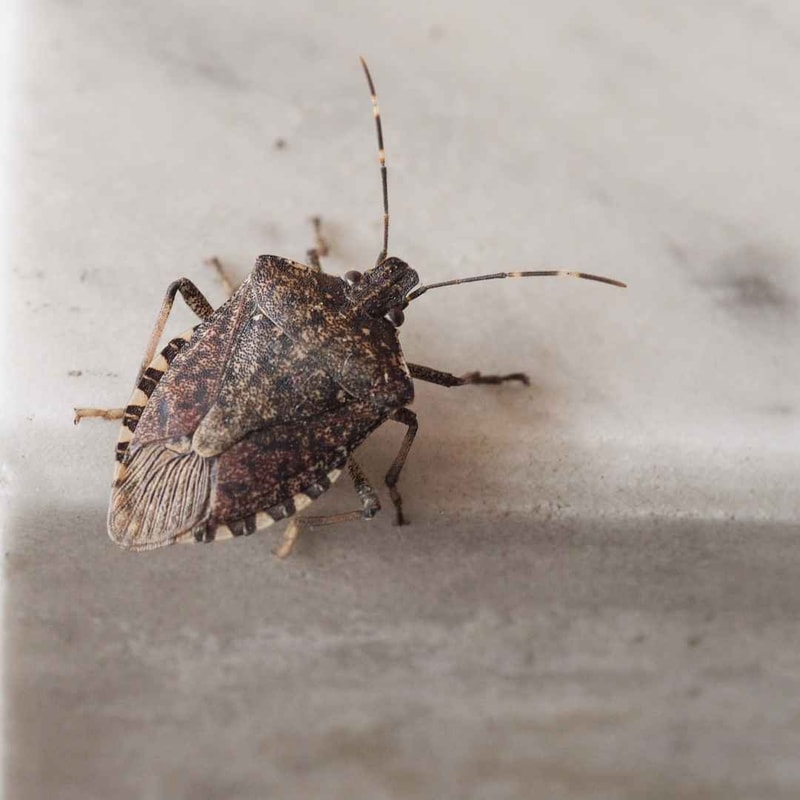
Brown marmorated stink bugs (Halyomorpha halys) are commonly associated with residential, agricultural, and wooded areas throughout Pennsylvania, including the broader Hanover, Pennsylvania, region. Originally from Asia, this invasive insect has become established across much of the United States and is well adapted to Pennsylvania's climate. In and around Hanover, brown marmorated stink bugs are typically found outdoors on trees, shrubs, gardens, orchards, and agricultural crops during the warmer months. They feed on a wide variety of plants, including fruit trees, ornamental plants, vegetables, and field crops. The agricultural land, residential landscaping, and wooded areas surrounding Hanover provide suitable habitat and food sources for this species.
Within Hanover's residential neighborhoods, brown marmorated stink bugs are often found on the exterior walls of houses, around windows and doors, beneath roof overhangs, and near other areas that receive sunlight. During late summer and fall, these insects begin searching for sheltered locations where they can spend the winter. They frequently gather on the sunny sides of buildings, particularly on warm afternoons, before crawling into small openings around window frames, door frames, siding, soffits, rooflines, utility penetrations, and foundation gaps. They may also enter through damaged screens, attic vents, and other openings in a building's exterior. Homes surrounded by trees, gardens, orchards, or agricultural fields may experience noticeable seasonal activity, although stink bugs can appear at properties throughout the area.
Inside Hanover homes and businesses, brown marmorated stink bugs are most commonly encountered in attics, wall voids, spare rooms, upper floors, and other sheltered spaces after entering through exterior openings. They may emerge from hiding places on warm winter days or become more noticeable in early spring as temperatures rise. Unlike cockroaches, brown marmorated stink bugs do not typically reproduce indoors or establish breeding infestations inside buildings. Instead, they enter primarily to overwinter in protected locations. They do not bite people, damage building structures, or reproduce in stored household food, but they can become a nuisance when large numbers gather inside. When crushed or disturbed, they release a strong, unpleasant odor that can make removal frustrating.
Outside residential properties, brown marmorated stink bugs may also be found in orchards, vegetable gardens, agricultural fields, wooded edges, and areas containing fruit trees or ornamental vegetation around Hanover. They feed on a wide range of plants and can damage apples, peaches, pears, tomatoes, peppers, and other crops by piercing plant tissue and feeding on developing fruit or seeds. Their activity is generally greatest during the warmer growing season, while their movement toward buildings becomes particularly noticeable in late summer and fall. The timing and severity of these seasonal movements vary with temperature, weather, and the availability of nearby vegetation.
Green Stink Bugs
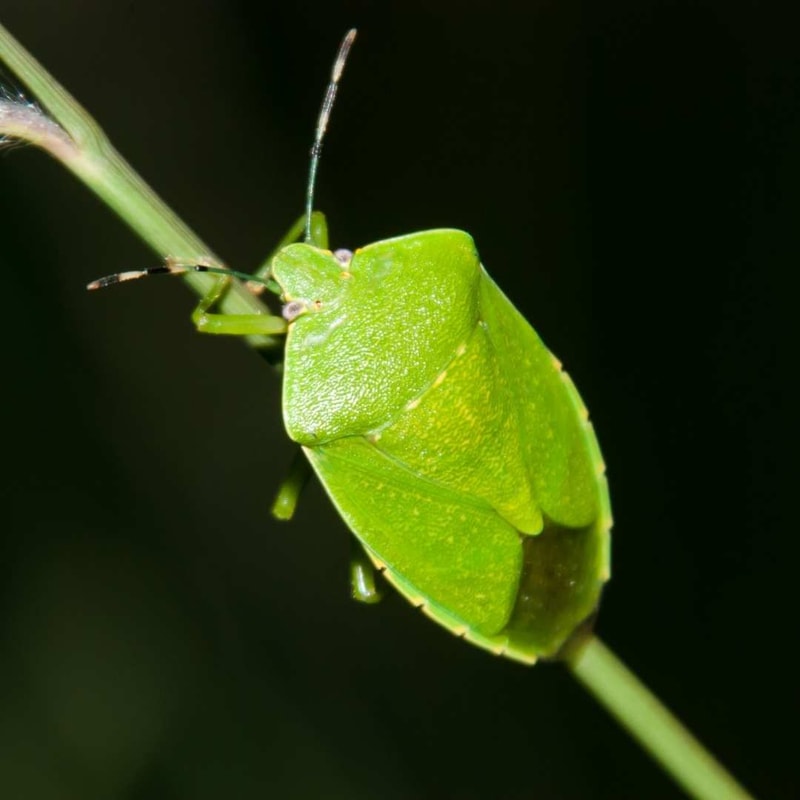
Green stink bugs, particularly the common green stink bug (Chinavia hilaris), are typically found outdoors in agricultural, wooded, and residential areas throughout Pennsylvania, including habitats around Hanover, Pennsylvania. These insects are plant-feeding pests that thrive where trees, shrubs, gardens, and crops provide a steady food supply. The agricultural fields, orchards, gardens, and wooded areas surrounding Hanover offer suitable habitat for green stink bugs, especially during the warmer months from late spring through early fall.
Around Hanover homes, green stink bugs may be found on ornamental trees, shrubs, flowering plants, vegetable gardens, and fruit trees. They feed by piercing plant tissue and extracting fluids, which can damage developing fruit, seeds, and other plant parts. Homeowners may notice them on tomatoes, beans, peppers, fruit trees, and other garden plants, although the plants they use depend on what is available locally. They may also appear on vegetation along property boundaries, woodland edges, fences, and landscaped areas where plants provide food and shelter. Unlike brown marmorated stink bugs, which are well known for gathering on buildings in fall to seek winter shelter, green stink bugs are primarily associated with vegetation and are less commonly recognized as a major nuisance pest inside homes.
In the agricultural areas surrounding Hanover, green stink bugs may occur in crop fields, orchards, and other cultivated landscapes where suitable host plants are available. They can feed on crops such as soybeans, corn, vegetables, and various fruit crops, potentially reducing crop quality when populations are high. They may also inhabit woodland edges and areas containing wild plants that serve as alternative food sources. Their numbers can increase during favorable growing conditions, although their distribution may change as crops mature, plants become less suitable, or temperatures decline.
Green stink bugs are generally active outdoors during warm weather. As autumn approaches and temperatures drop, some may seek sheltered locations, but they are not as strongly associated with large indoor overwintering aggregations as brown marmorated stink bugs. An occasional green stink bug may enter a Hanover home through an open door, window, or damaged screen, but finding one indoors does not necessarily indicate an infestation. Green stink bugs are typically bright green, shield-shaped insects, often with narrow orange or yellow markings along the edges of the body. They release an unpleasant odor when crushed or disturbed, which helps discourage predators.