
Request A Quote For Wasp Control
Why Getting Rid Of Wasps Is Important
Getting rid of wasps is important because they can pose a safety risk to homeowners, families, pets, and visitors, especially when they build nests near frequently used areas of a property. Wasps can become aggressive when they feel threatened or when someone gets too close to their nest, and many species can sting multiple times. Their stings can cause pain, swelling, redness, and itching, while people with insect sting allergies may experience severe, potentially life-threatening allergic reactions. Wasp nests around doorways, patios, decks, garages, sheds, rooflines, and other high-traffic areas can increase the likelihood of accidental encounters and painful stings. As a colony grows, wasps may become more defensive when protecting their nest, making nearby outdoor activities less comfortable and potentially more dangerous. Wasps can also build nests inside wall voids, attics, and other concealed spaces, making it difficult to determine the full extent of an infestation without a careful inspection. Although wasps provide some environmental benefits by helping control other insect populations and, in some cases, pollinating plants, nests located too close to homes or businesses can create unnecessary risks. Removing problematic nests safely and promptly can reduce the chance of stings, help protect vulnerable individuals and pets, and make outdoor spaces more comfortable to use. Because disturbing a nest can trigger defensive behavior, it is generally best to have our qualified pest-control professionals handle nests in hazardous or difficult-to-reach locations.
Wasp Infestations
A wasp infestation can grow significantly over the course of a spring and summer, with the speed of growth depending on the wasp species, weather conditions, food availability, and the age of the colony. In the spring, a single fertilized queen typically emerges from winter dormancy and begins building a nest, laying eggs, and raising the first generation of workers. During this early stage, the nest may contain only a small number of wasps, making the activity easy to overlook. Once the first workers mature, usually within several weeks, they begin helping the queen expand the nest, care for developing larvae, and gather food. This allows the queen to focus on laying more eggs, and the colony can grow from a handful of wasps to dozens or hundreds as the season progresses. By late summer and early fall, some colonies of social wasps, such as yellowjackets and paper wasps, may contain hundreds or even thousands of individuals, depending on the species and nest conditions. As the colony grows, wasps may become more noticeable around rooflines, eaves, decks, sheds, attics, wall voids, garbage containers, and outdoor eating areas. Larger colonies can also create a greater risk of multiple stings if the nest is disturbed. Although most wasp colonies naturally die off as colder weather arrives, newly produced queens may leave to overwinter and establish new colonies the following spring. Because a small nest can expand considerably during a single warm season, identifying wasp activity early and arranging safe removal when a nest poses a risk can help prevent the problem from becoming more difficult and dangerous to manage. Homeowners should avoid knocking down or spraying an active nest themselves, particularly when it is large, concealed, or located in a hard-to-reach area.
Professional Wasp Control Services
Hiring our local wasp exterminators is the safest and most effective way to eliminate a wasp infestation because attempting to remove a nest yourself can expose you, your family, and your pets to painful stings and potentially dangerous allergic reactions. Wasps can become aggressive when they perceive a threat to their nest, and disturbing a colony with household sprays, homemade remedies, or physical removal attempts can provoke multiple wasps to attack. Our professional exterminators have the training, protective equipment, and specialized treatments needed to manage active nests while reducing the risk of stings. Our professional pest-control technicians can also identify the type of wasp involved, locate nests in difficult-to-access areas such as roof eaves, attics, wall voids, soffits, and sheds, and select an appropriate treatment based on the species and location. This is particularly important because treating only the wasps that are visible may leave the nest and developing colony intact, allowing the infestation to continue growing. Our local exterminators can also identify conditions around your property that may attract wasps, such as accessible food sources, exposed garbage, and sheltered nesting locations, and recommend practical steps to reduce future problems. Our professionals also understand how to approach nests near doorways, walkways, playgrounds, and other high-traffic areas where wasp activity creates a greater risk for people and pets. Although do-it-yourself products may appear less expensive initially, an unsuccessful treatment can lead to repeated expenses and increase the likelihood of a dangerous encounter. By hiring our certified local wasp exterminators, homeowners can benefit from targeted treatment, safer nest removal when appropriate, and recommendations for preventing future nesting activity. If you discover a wasp nest on your property, avoid disturbing it and contact us to schedule a professional inspection, especially if the nest is large, concealed inside a structure, or located near an entrance or an area used frequently by children or pets.
Wasps In Pennsylvania
Bald Faced Hornets
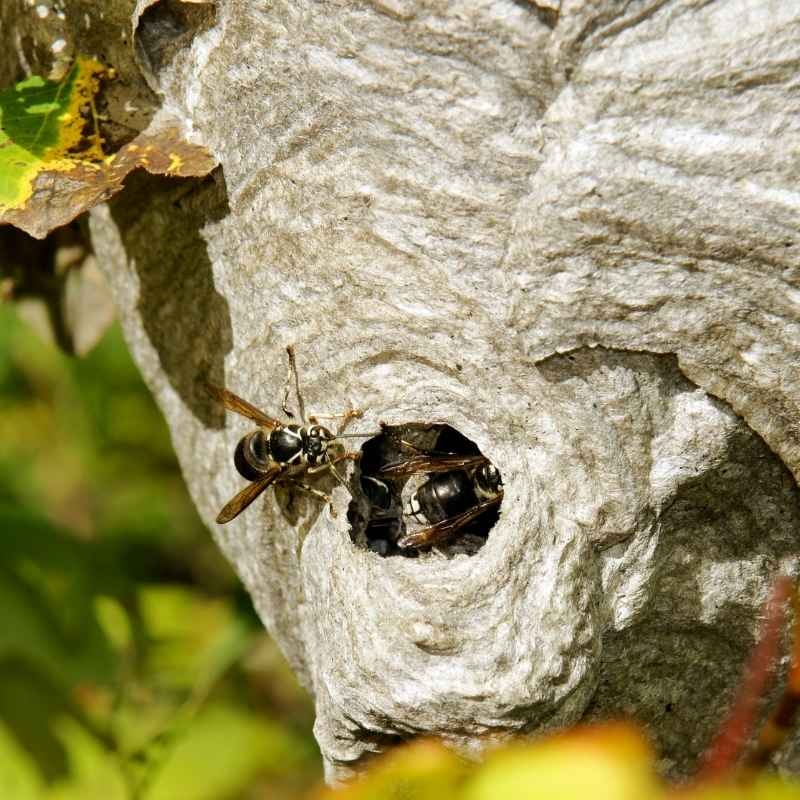
Around Hanover, PA, bald-faced hornets are most commonly found nesting in wooded areas, residential yards, parks, and other locations with trees and shrubs that provide shelter and access to food. Despite their name, bald-faced hornets are actually a type of yellowjacket wasp. They build distinctive, enclosed, paper-like nests that are often suspended from tree branches, typically several feet to several dozen feet above the ground. In Hanover and the surrounding York and Adams Counties, homeowners are most likely to encounter these nests in mature trees, ornamental trees, dense shrubs, and wooded areas near homes. Bald-faced hornets may also build nests in bushes, beneath roof overhangs, or in other sheltered outdoor locations, although exposed nests hanging from tree branches are especially characteristic of this species. Residential properties bordering wooded lots, fields, and other green spaces can provide suitable nesting locations because the hornets have access to insects, nectar, and other food sources. During the warmer months, particularly from late spring through summer and into early fall, a colony grows as workers help the queen expand the nest and raise additional young. Nests that begin relatively small in the spring can become large, football-shaped or even basketball-sized structures by late summer, making them easier to spot in trees and shrubs. Bald-faced hornets can be defensive when people approach their nests, especially when the colony is well established. If you discover a papery nest hanging from a tree or attached to a structure near your home, avoid disturbing it or attempting to remove it yourself. Our professional pest-control technicians can identify the nest, assess the risk, and determine the safest removal method.
Cicada Killer Wasps
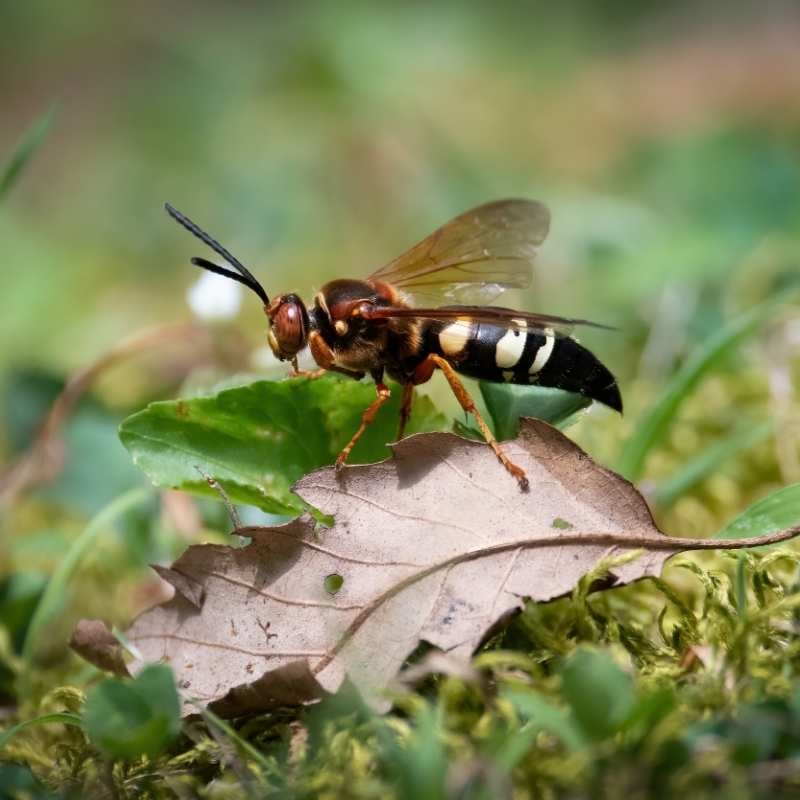
Around Hanover, PA, cicada killer wasps are most commonly found in sunny, open areas with dry, loose, well-drained soil where they can dig underground nesting burrows. Homeowners are most likely to encounter them in residential lawns, gardens, flower beds, along sidewalks and driveways, around patios, and on sloped sections of their properties. They may also establish nests in parks, golf courses, athletic fields, playgrounds, and other open spaces throughout Hanover and the surrounding York and Adams Counties. Cicada killers prefer areas with sparse vegetation or exposed soil because these conditions make it easier for females to excavate their burrows. Homeowners may notice small mounds of loose dirt with a round entrance hole nearby, often accompanied by large wasps flying low over the ground. Cicada killers are typically most active during the summer, particularly from July through September in south-central Pennsylvania, when adult wasps emerge and females hunt cicadas to provision their underground nests. Although their large size and yellow-and-black markings can make them look intimidating, cicada killers are generally solitary and much less defensive than social wasps such as yellowjackets. Male cicada killers may fly aggressively around people who enter their territory, but they cannot sting. Females can sting, although they are generally unlikely to do so unless handled or directly threatened. When cicada killers establish numerous burrows in a lawn, garden, or other frequently used area, their digging can disturb the soil and make the area less attractive or comfortable to use. If you notice extensive nesting activity around your Hanover property, our professional pest-control technicians can confirm the species and customize an appropriate management approach.
European Hornets
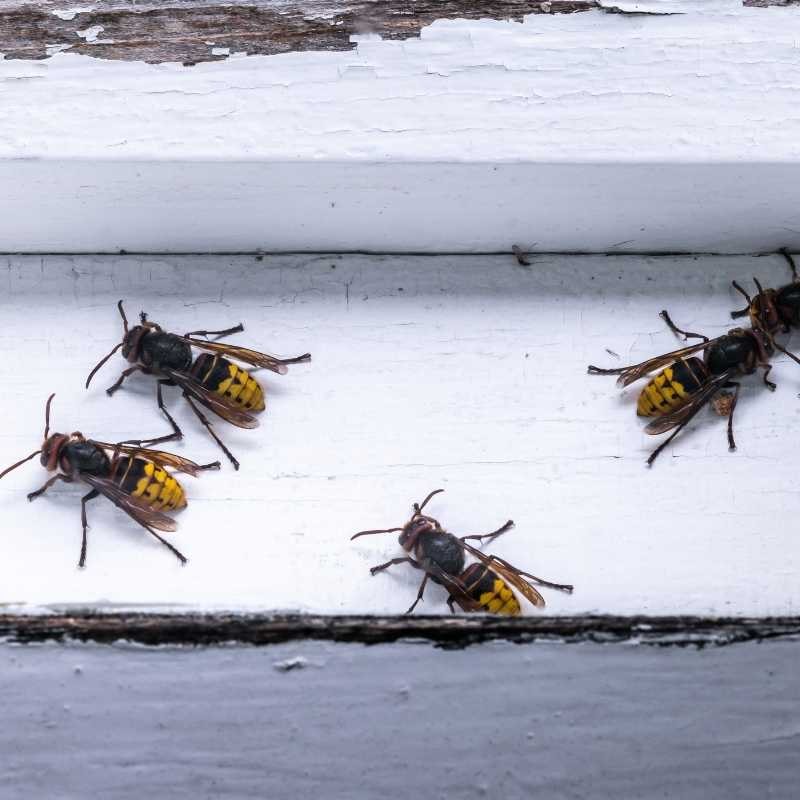
Around Hanover, PA, European hornets are most commonly found in wooded areas, residential yards, and properties with mature trees, particularly where suitable nesting sites and reliable food sources are available. Unlike bald-faced hornets, which typically build large, exposed paper nests hanging from tree branches, European hornets often establish their nests in enclosed or sheltered locations. Homeowners in Hanover and the surrounding York and Adams Counties may find European hornets nesting inside hollow trees, tree cavities, fallen logs, and other natural openings in wooded areas. They can also nest in wall voids, attics, barns, sheds, garages, and other outbuildings, especially when these structures provide a protected space with an accessible entrance. European hornets are often attracted to properties with mature oak trees and other vegetation that supports insects, tree sap, and fruit. They may also visit gardens, orchards, and yards with fallen apples, pears, grapes, or other ripe and decaying fruit. During late summer and early fall, these hornets can become particularly noticeable around outdoor lights because, unlike many other wasps, they are active after dark and may fly toward illuminated windows, porches, and entryways. In Hanover, activity is generally most noticeable from late spring through early fall, when colonies develop and worker hornets forage for food. European hornets can defend their nests if disturbed, so finding several hornets repeatedly entering a small opening in a tree or building may indicate a nearby colony. If you suspect a nest inside your home's walls, attic, or another enclosed space, avoid blocking the entrance or attempting to treat the nest yourself, as this can cause the hornets to find alternative routes into the building. Our certified local pest-control professionals can identify the nesting location and determine the safest way to manage the colony.
Mud Dauber Wasps
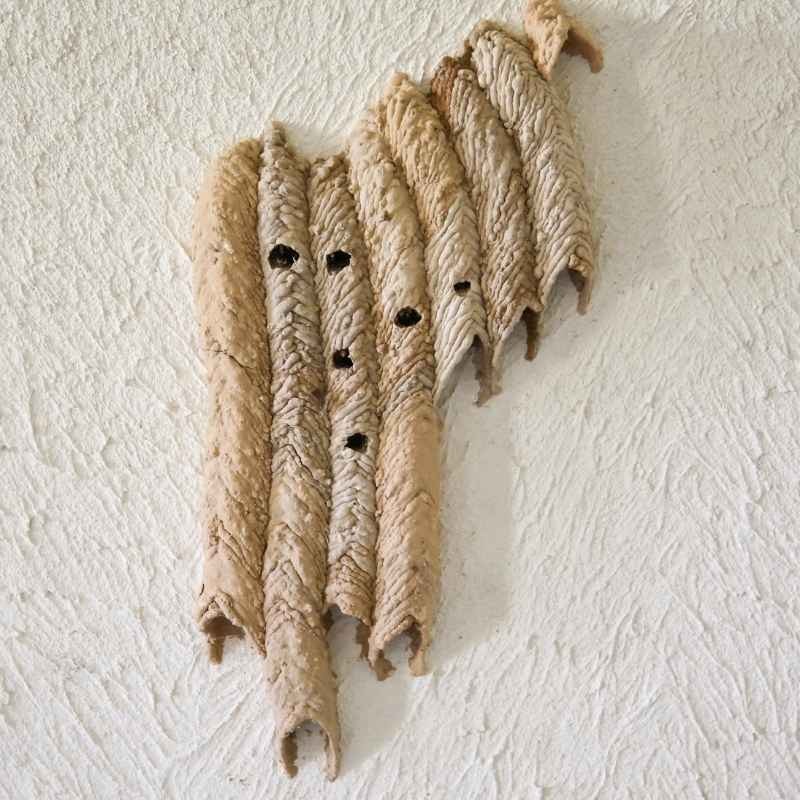
Around Hanover, PA, mud dauber wasps are most commonly found around homes, garages, sheds, barns, and other structures that provide sheltered surfaces for building their mud nests. These solitary wasps construct small, tube-shaped or clustered mud nests on protected areas such as porch ceilings, beneath roof eaves, along exterior walls, inside garages, and around window frames and doorways. In Hanover and the surrounding York and Adams Counties, homeowners may also find mud dauber nests in attics, under decks, inside barns, and in other sheltered locations that remain relatively undisturbed. Mud daubers prefer areas near sources of moist soil or mud, which they use to construct their nests, so properties with gardens, drainage areas, ponds, or exposed soil may provide suitable nesting conditions. They are also frequently found around sheds and outbuildings where spiders are abundant, because many mud dauber species capture spiders to provision their nests for developing larvae. During the warmer months, particularly from late spring through summer, adult mud daubers become more active as they gather mud, hunt spiders, and reproduce. Their nests may appear as narrow, elongated mud tubes attached to walls or as clusters of small, rounded mud cells, depending on the species. Although their nests can be unsightly when attached to a home or business, mud daubers are generally less aggressive than social wasps such as yellowjackets and typically do not defend their nests in large groups. They can also provide a natural benefit by reducing local spider populations. However, repeated nesting around doorways, porches, garages, and other frequently used areas may become a nuisance, particularly when nests accumulate over time. If mud dauber nests are forming in inconvenient locations around your Hanover property, our pest-control professionals can help identify the species, determine whether removal is necessary, and recommend ways to discourage future nesting.
Paper Wasps
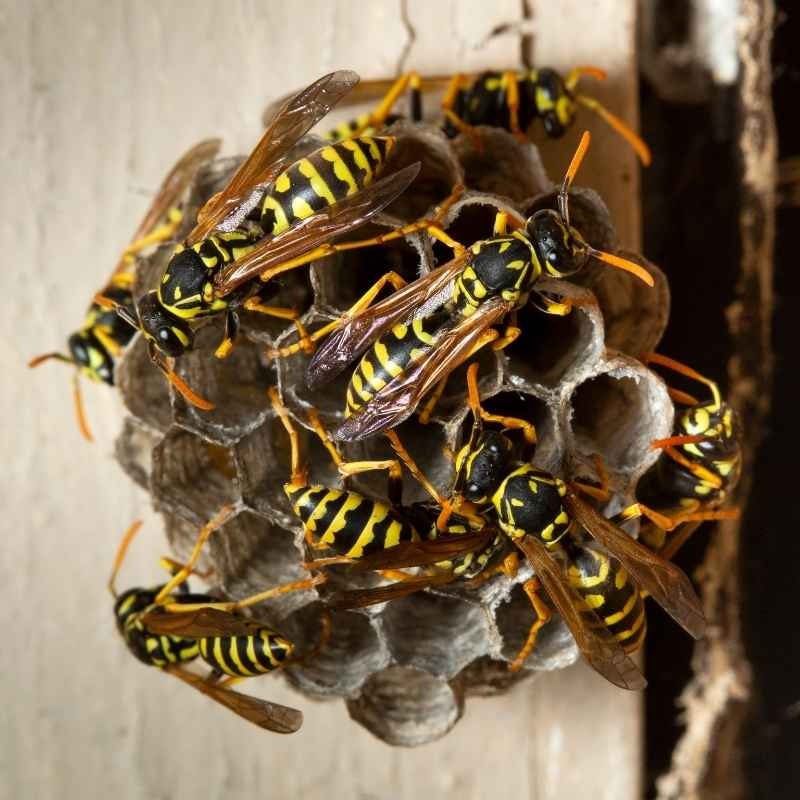
Around Hanover, PA, paper wasps are most commonly found around residential properties, businesses, and outdoor structures that provide sheltered locations for building their nests. Homeowners are particularly likely to find paper wasp nests beneath roof eaves, under porch ceilings, along deck railings, beneath balconies, and around doorframes and window frames. Paper wasps build open, umbrella-shaped nests made from a papery material, with individual cells visible from below and no outer covering surrounding the nest. In Hanover and the surrounding York and Adams Counties, they may also establish nests inside sheds, garages, barns, and other outbuildings, particularly beneath roof overhangs or in corners that receive little disturbance. Gardens, shrubs, trees, and fences can also provide suitable nesting locations, especially when they offer protection from wind and rain. Paper wasps are attracted to areas where they can find caterpillars, flies, and other insects to feed their larvae, along with nectar and other sugary food sources. During the spring, a fertilized queen typically begins a small nest and raises the first generation of workers. As the weather warms through summer, the colony grows, and the nest becomes more noticeable as additional cells are built. Paper wasps are generally most active from late spring through early fall in south-central Pennsylvania. Although they are usually less aggressive than yellowjackets when left undisturbed, paper wasps can sting repeatedly if they feel their nest is threatened. Nests located near front doors, patios, decks, outdoor seating areas, and frequently used walkways can therefore increase the risk of accidental encounters. If you discover a paper wasp nest near an entrance or another high-traffic area, avoid touching or knocking it down. Our professional pest-control technicians can identify the wasp species, assess the nest's location, and customize an appropriate removal solution.
Yellowjackets
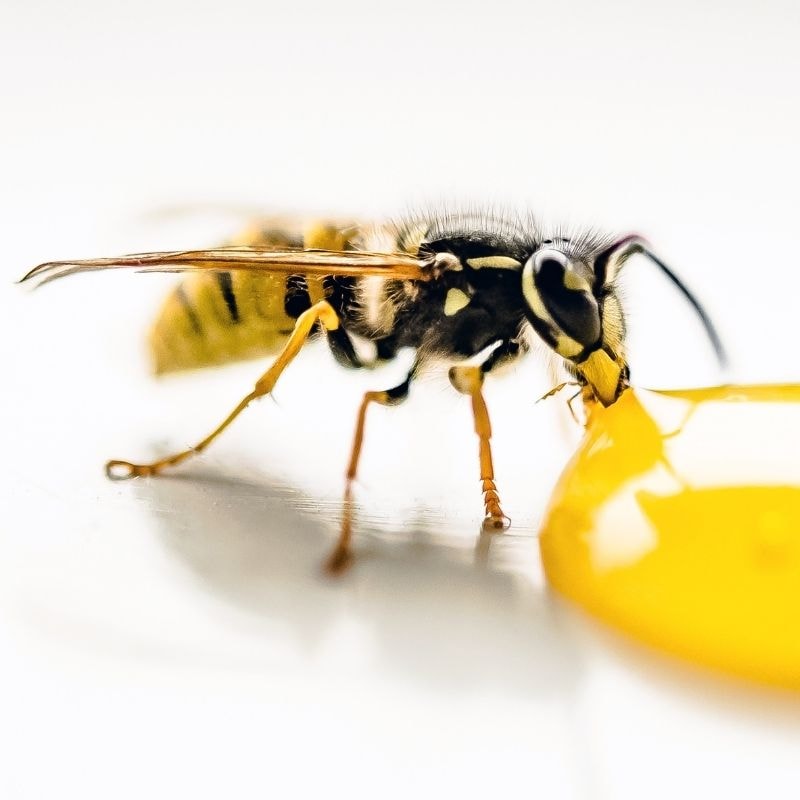
Around Hanover, PA, yellowjackets are most commonly found around residential properties, wooded areas, gardens, parks, and other locations where they can find food and suitable places to build their nests. Unlike paper wasps, which typically construct exposed, umbrella-shaped nests beneath roof eaves and porch ceilings, many yellowjacket species build their nests underground in abandoned rodent burrows, beneath landscaping timbers, or in other concealed spaces. Homeowners in Hanover and the surrounding York and Adams Counties may discover yellowjacket nests in lawns, flower beds, beneath shrubs, along property borders, and near the foundations of homes. Some species also establish nests inside wall voids, attics, sheds, garages, and other enclosed spaces, where small openings provide access to protected nesting areas. Yellowjackets are also frequently encountered around outdoor garbage cans, dumpsters, picnic tables, grills, gardens, and fruit trees because they are attracted to sugary foods, ripe fruit, and protein sources. Their activity generally increases throughout the summer, with colonies often reaching their largest size in late summer and early fall. During this period, yellowjackets may become especially noticeable around outdoor gatherings, food preparation areas, and frequently used sections of a property. A nest that goes unnoticed in the spring can develop into a colony containing hundreds or, in some cases, thousands of wasps by late summer. Yellowjackets can be particularly dangerous when their nests are disturbed because they may defend the colony in large numbers and sting repeatedly. Nests near sidewalks, playgrounds, driveways, entrances, and other high-traffic areas present an increased risk of accidental encounters. If you notice yellowjackets repeatedly entering and exiting the same hole in the ground or a small opening in your home's exterior, a nest may be nearby. Avoid blocking the entrance, mowing directly over the area, or attempting to spray the nest yourself. Our certified, local pest-control professionals can locate the colony, determine the likely nesting species, and recommend an appropriate treatment to reduce the risk of stings and prevent the infestation from becoming a larger problem.